Project Showcase
Agricultural Technologies Catalog Module
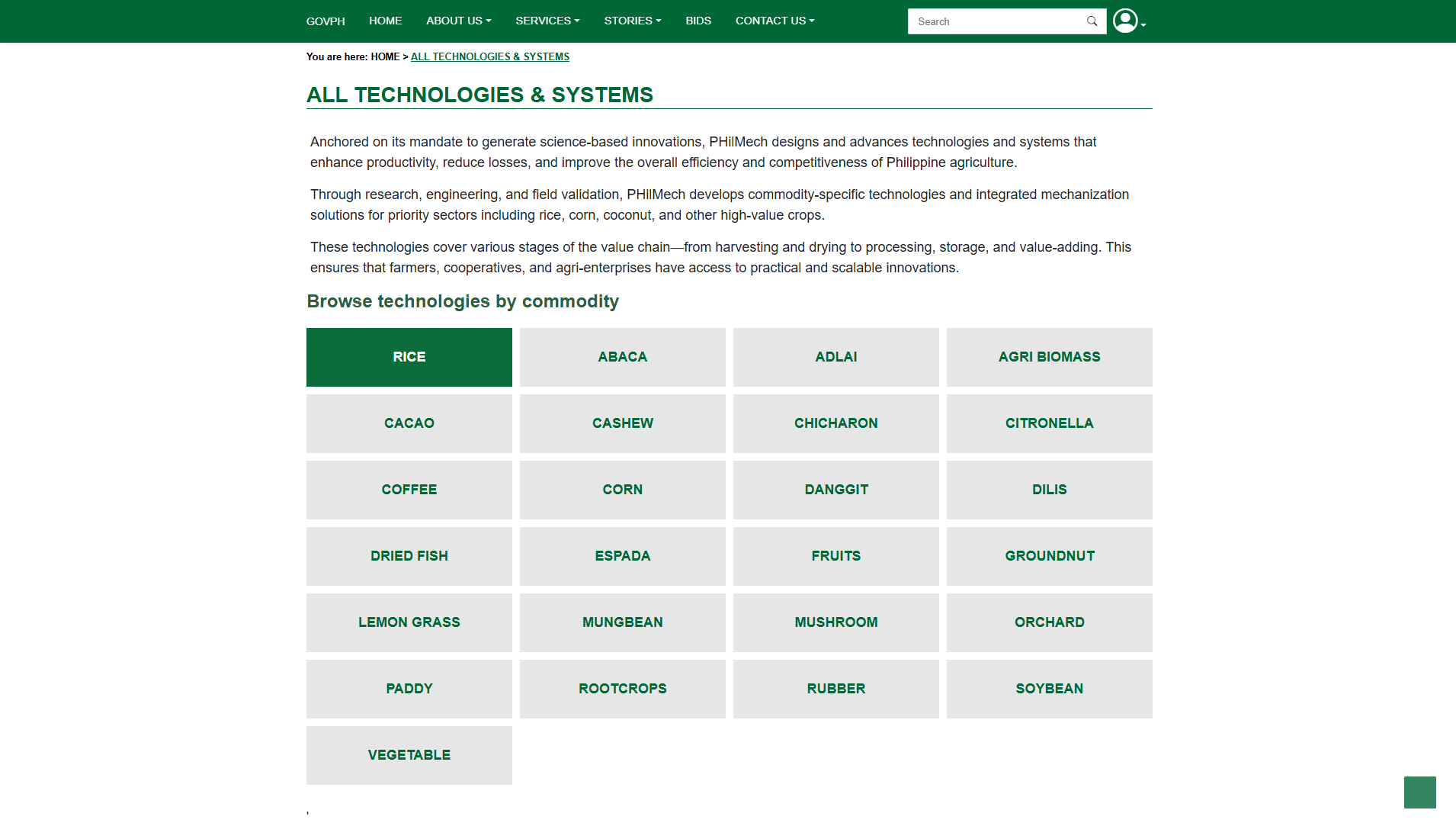
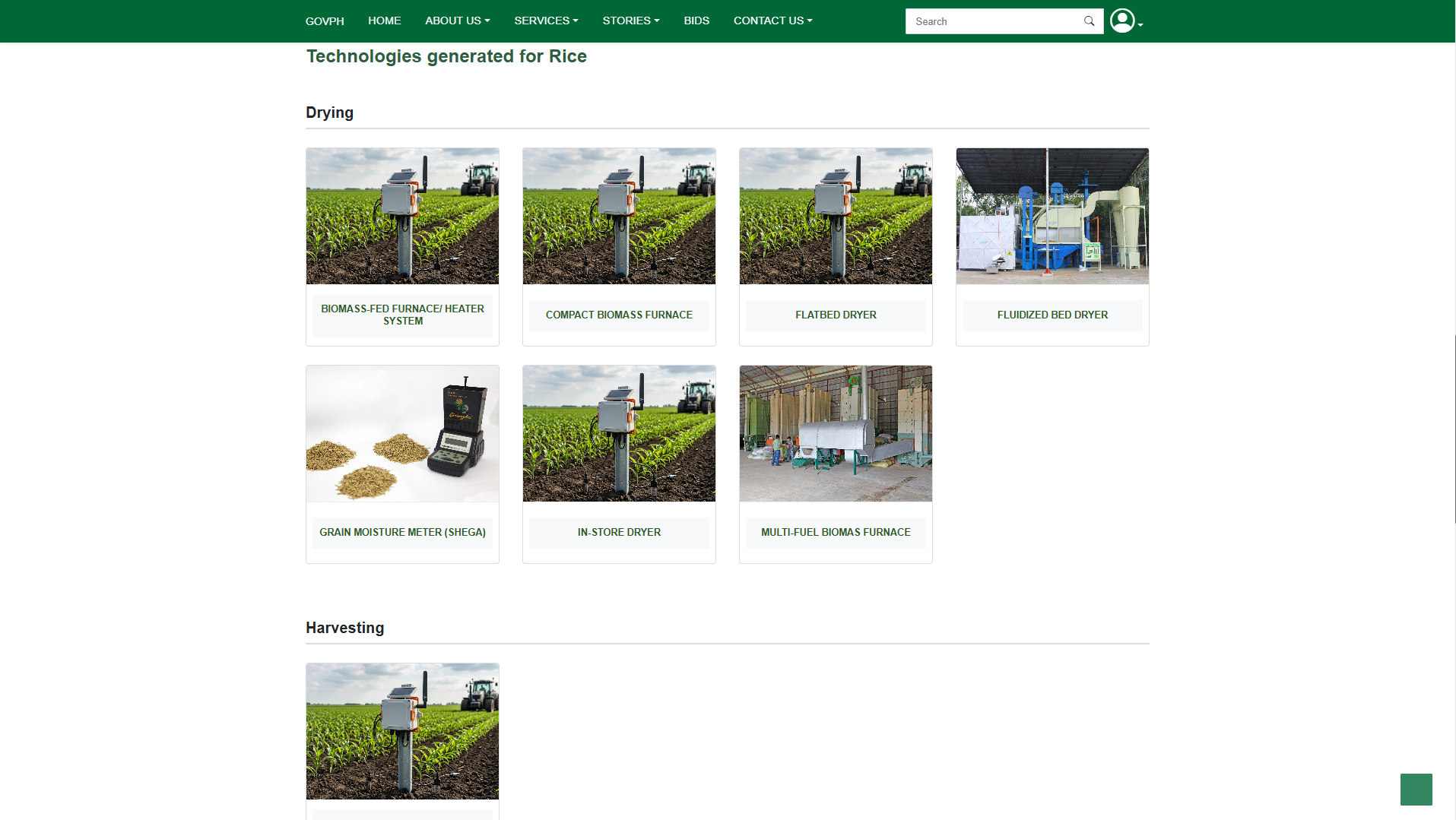
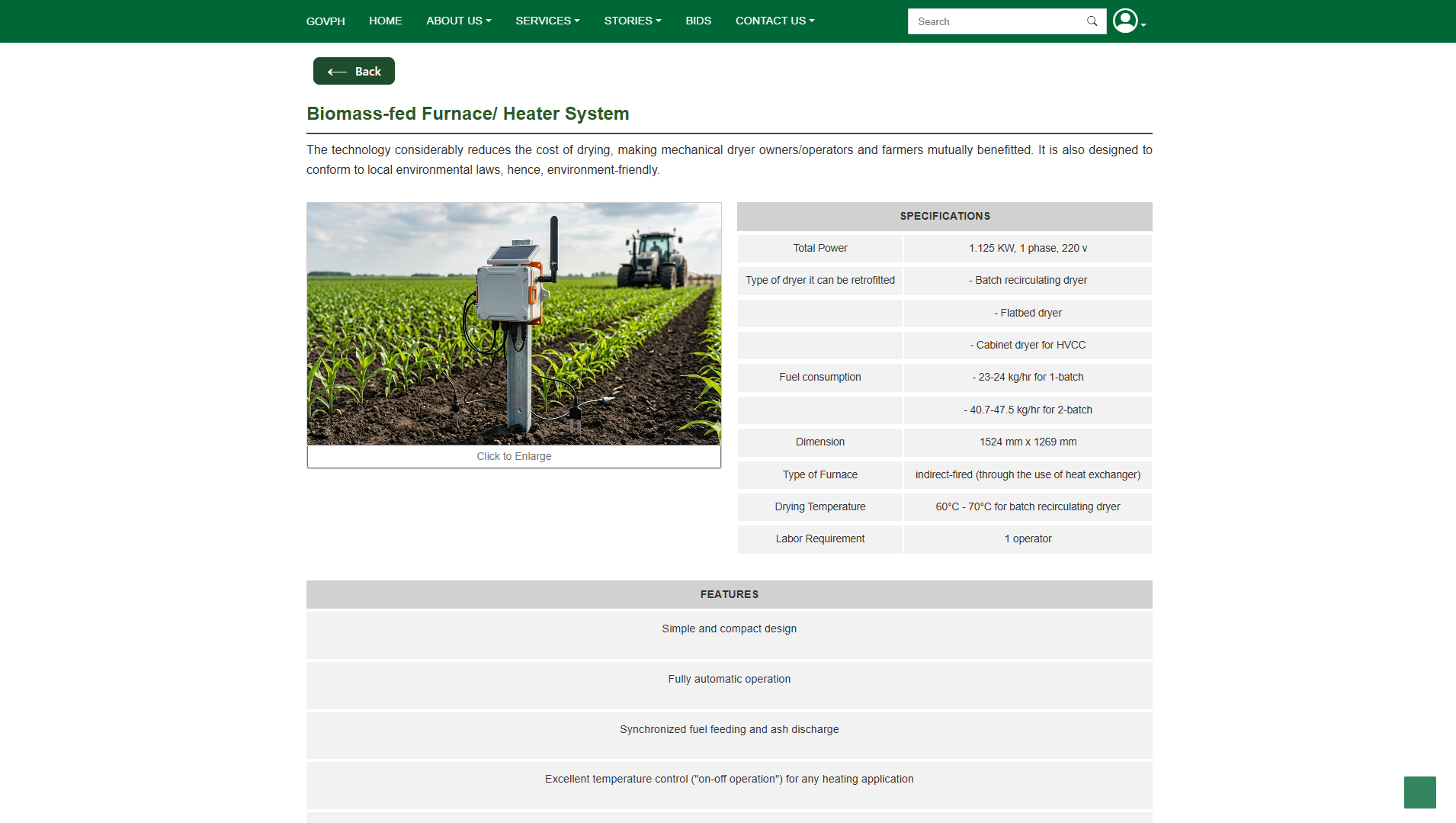
A dynamic CMS-driven module that showcases agricultural hardware technologies developed by the agency, organized by operation type and filtered by commodity selection.
Overview
Project Summary
This project is a dynamic module integrated into the agency’s website that serves as a centralized catalog of agricultural hardware technologies developed by the organization.
It is designed to present technologies in a structured and intuitive way by categorizing them based on their operational function (e.g., planting, harvesting, post-harvest processing). On top of this categorization layer, a commodity-based controller allows users to filter technologies according to specific crops such as rice, mango, cassava, and other supported commodities.
A significant part of the development involved designing and implementing the database structure and system architecture to support flexible relationships between technologies, commodities, and operational categories. This ensures that new technologies can be added without restructuring the system, making it highly scalable and maintainable
The module improves discoverability of agricultural innovations and provides stakeholders with an organized and data-driven way to explore available technologies relevant to their specific agricultural needs.
Architecture
Technical Implementation
1. Presentation Layer: The frontend renders a dynamic catalog of agricultural technologies, grouped by operational categories such as planting, harvesting, and post-harvest processing. A commodity selector (e.g., rice, mango, cassava) acts as the primary filtering mechanism, allowing users to refine displayed technologies based on agricultural relevance. The UI is designed to support dynamic updates without requiring structural changes to the page.
2. Application / Controller Layer: The module logic handles a commodity-based filtering and an operation-based categorization. While the controllers manages query composition to ensure that the correct set of technologies is retrieved based on user selection. This layer abstracts filtering logic away from the presentation layer, ensuring maintainability and separation of concerns.
3. Data Layer / Database Design: A relational database structure was implemented to support one-to-many and many-to-many hierarchical relationships between entities. Entities such as technologies, commodities and operation types. This structure allows a single technology to be associated with a single operation type to multiple commodities. The schema was normalized to reduce redundancy and ensure scalability for future expansions.
4. Filtering and Query Strategy: Data retrieval is dynamically driven through relational joins and conditional queries based on selected commodity and operation type. This enables efficient filtering without hardcoded mappings, allowing the dataset to grow organically.